AI Explained (Without the Buzzword Hangover)
5 AI Misconceptions Killing Your Business Growth
Discover the 5 AI misconceptions that could be hindering your business growth and learn how to overcome them for success!
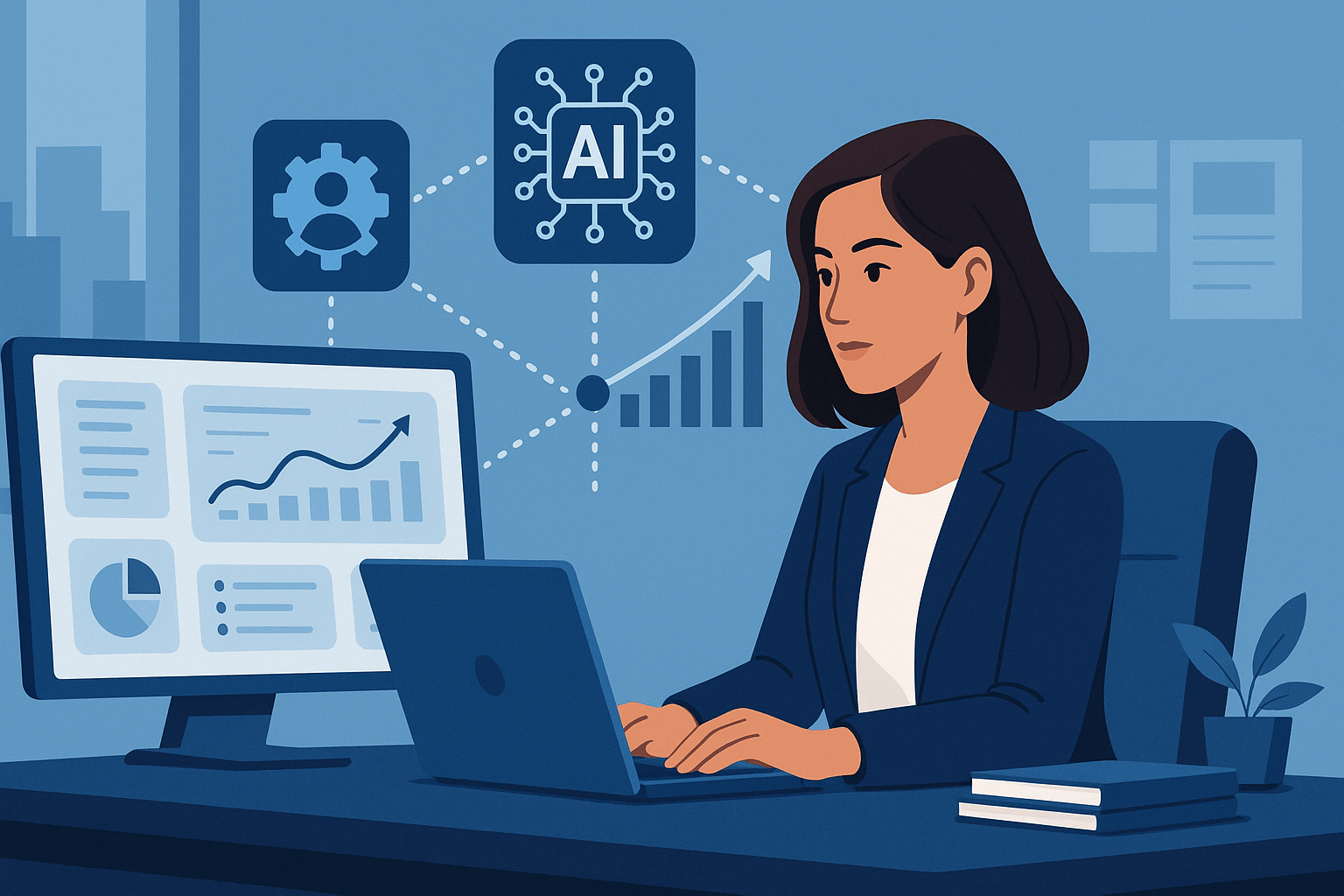
Picture this: You're at a dinner party, trying to impress your friends with tales of your new AI strategy. You dramatically wave your hands and declare, "AI will handle everything! I can finally kick back and enjoy life!" Your friends nod, but then someone asks, "So, how does it work?" Silence fills the room. You realize you might be mistaking AI for some kind of magic genie rather than a powerful tool that needs a little TLC.
Let’s be honest, the world of AI is a lot like a sci-fi movie—the plot twists are confusing, the characters are unpredictable, and there’s always that one person who insists on spoiling the ending. In the midst of all this, small and mid-sized businesses are grappling with AI misconceptions that are not just amusing but actually detrimental to their growth.
So grab your popcorn, and let’s dive into the 5 AI misconceptions that are killing your business growth. By the end of this post, you’ll have a clearer understanding of AI, and you might even be able to dazzle your friends at that next dinner party—without the awkward silence!
1. AI Is Just a Fancy Buzzword
Let's break this down: AI is not just a trendy term to throw around in meetings to impress your boss. It's not like saying 'synergy' or 'paradigm shift'—those are just words that make people roll their eyes. AI encompasses a range of technologies that can analyze data, automate tasks, and even make predictions.
Ignoring AI because you think it’s just hype is like refusing to use the internet because you think it’s just a passing phase. Spoiler alert: the internet is still here, and it’s not going anywhere! Embracing AI can lead to better decision-making, increased efficiency, and ultimately, happier customers. Who doesn’t want that?
2. AI Will Replace Human Jobs
Ah, the classic fear of AI taking over the world—cue the ominous music! While AI does automate certain tasks, it doesn't mean your team will be replaced by robots. In fact, AI is more like your trusty sidekick than a villain. Think Robin to your Batman.
With AI handling mundane tasks, your team can focus on more creative and strategic initiatives. Imagine how much time your marketing team could save if they weren’t stuck sifting through data or manually entering information. Instead, they could brainstorm the next viral campaign or create that perfect Instagram post. Win-win!
3. Implementing AI Is Too Expensive
Let’s face it: the misconception that AI is only for big corporations with deep pockets is as outdated as dial-up internet. While there are certainly costly AI solutions out there, there are plenty of affordable options for small and mid-sized businesses.
There are various tools available today, from low-cost AI chatbots to data analytics platforms, that won’t break the bank. Think of AI as a smart investment that can save you money in the long run. By streamlining operations and increasing productivity, AI can help you grow without needing a massive budget.
4. You Need a PhD to Use AI
Ever felt intimidated by tech jargon that sounds like it was pulled straight from a sci-fi novel? Fear not! You don’t need to be a data scientist or have a PhD to implement AI in your business. Many AI tools are designed to be user-friendly, with intuitive interfaces and helpful tutorials.
Moreover, many companies offer support and resources to help you navigate the world of AI. So roll up your sleeves, dive in, and don’t be afraid to ask for help. Remember, even the smartest AI systems started with a simple question: “What can I do with this data?”
5. AI Can Solve Every Problem
Ah, the myth that AI is a magical solution to all your problems. If only it were that simple! AI is not a one-size-fits-all solution. It’s not the holy grail of business; it’s a tool that can help with specific tasks.
Before you implement AI, take a step back and assess your business needs. Ask yourself: What specific problems are we trying to solve? How can AI assist us in achieving our goals? Understanding your unique challenges will help you leverage AI effectively rather than relying on it to solve everything. After all, even the best tools require a skilled user!
Common Failure Modes
- Failing to define clear objectives for AI implementation.
- Overlooking data quality, leading to inaccurate results.
- Ignoring the importance of employee training and support.
- Assuming AI will work perfectly without proper testing.
- Neglecting to involve stakeholders in the decision-making process.
- Forgetting to assess and adjust AI strategies regularly.
- Using AI without understanding its limitations and capabilities.
Implementation Plan: A 4-Week Timeline
Week 1: Assess Your Needs
Begin with a thorough evaluation of your business operations. Identify areas where AI could add value. Engage your team in brainstorming sessions to gather insights on pain points and opportunities. This will lay the groundwork for a more targeted AI strategy.
Week 2: Research Solutions
Now that you know where you want to implement AI, it’s time to research available tools and platforms. Look for options that fit your budget and needs. Don’t forget to check reviews and case studies from similar businesses—after all, if others can do it, so can you!
Week 3: Pilot Testing
Choose one or two AI solutions that best fit your needs and run a pilot test. Monitor performance and gather feedback from your team. This is your chance to troubleshoot and make adjustments before a full-scale rollout.
Week 4: Launch and Train
Time to launch your AI solution! Ensure your team is trained on how to use the new tools effectively. Provide ongoing support and encourage feedback for continuous improvement. Remember, training is key to maximizing the benefits of AI!
Tooling Options
Scrappy
These are budget-friendly tools that are perfect for small businesses just getting started with AI:
- Chatbots for customer service: Many platforms offer free or low-cost options.
- Data analysis tools: Look for free versions of platforms like Google Analytics.
- Social media automation: Tools like Buffer or Hootsuite can help save time.
Growing
For businesses that are expanding and ready to invest more:
- AI-powered CRM systems: Consider options like HubSpot or Salesforce.
- Email marketing automation: Tools like Mailchimp offer AI features for targeted campaigns.
- Predictive analytics platforms: Explore options like Tableau or Microsoft Power BI.
Mature
For established businesses looking for advanced AI solutions:
- Custom AI development: Partner with firms that specialize in AI solutions tailored to your needs.
- Robotic Process Automation (RPA): Tools like UiPath can automate complex workflows.
- AI for supply chain optimization: Implement systems that use AI to predict demand and manage inventory.
Checklist: Are You Ready for AI?
- Have you defined clear objectives for AI implementation?
- Do you have the necessary data quality and infrastructure?
- Is your team prepared and trained for AI integration?
- Have you researched AI tools that fit your needs?
- Are you ready to monitor and analyze AI performance regularly?
- Have you considered potential ethical implications of using AI?
- Are you prepared to adjust strategies based on performance feedback?
- Have you involved all stakeholders in the process?
- Are you willing to invest time and resources into AI?
- Do you understand the limitations of AI and its capabilities?
FAQs
What are common misconceptions about AI?
Some common misconceptions include believing AI is just a buzzword, that it will replace human jobs, and that it’s too expensive for small businesses.
How can AI benefit small businesses?
AI can streamline operations, improve decision-making, and enhance customer experiences, ultimately leading to growth and efficiency.
Is AI only for tech-savvy companies?
No! Many AI tools are designed to be user-friendly, and training resources are available to help you get started.
What should I consider before implementing AI?
Can AI improve customer service?
Absolutely! AI-powered chatbots and customer support tools can handle inquiries 24/7, enhancing customer satisfaction.
How do I measure AI success?
Monitor key performance indicators (KPIs) relevant to your business goals and gather feedback from your team and customers.
Conclusion
Now that we've debunked some of the most common AI misconceptions, it's time for you to take action! Embrace the power of AI and watch your business grow and thrive. If you're feeling overwhelmed or unsure where to start, don't hesitate to reach out to Jackbyte for an AI and automation assessment. We're here to help you navigate the exciting world of AI and turn your misconceptions into opportunities!