Automation Horror Stories (And How to Avoid Them)
Why Your Automation Strategy Might Be a Recipe for Disaster
Discover why your automation strategy might be a disaster waiting to happen and how to avoid the pitfalls.
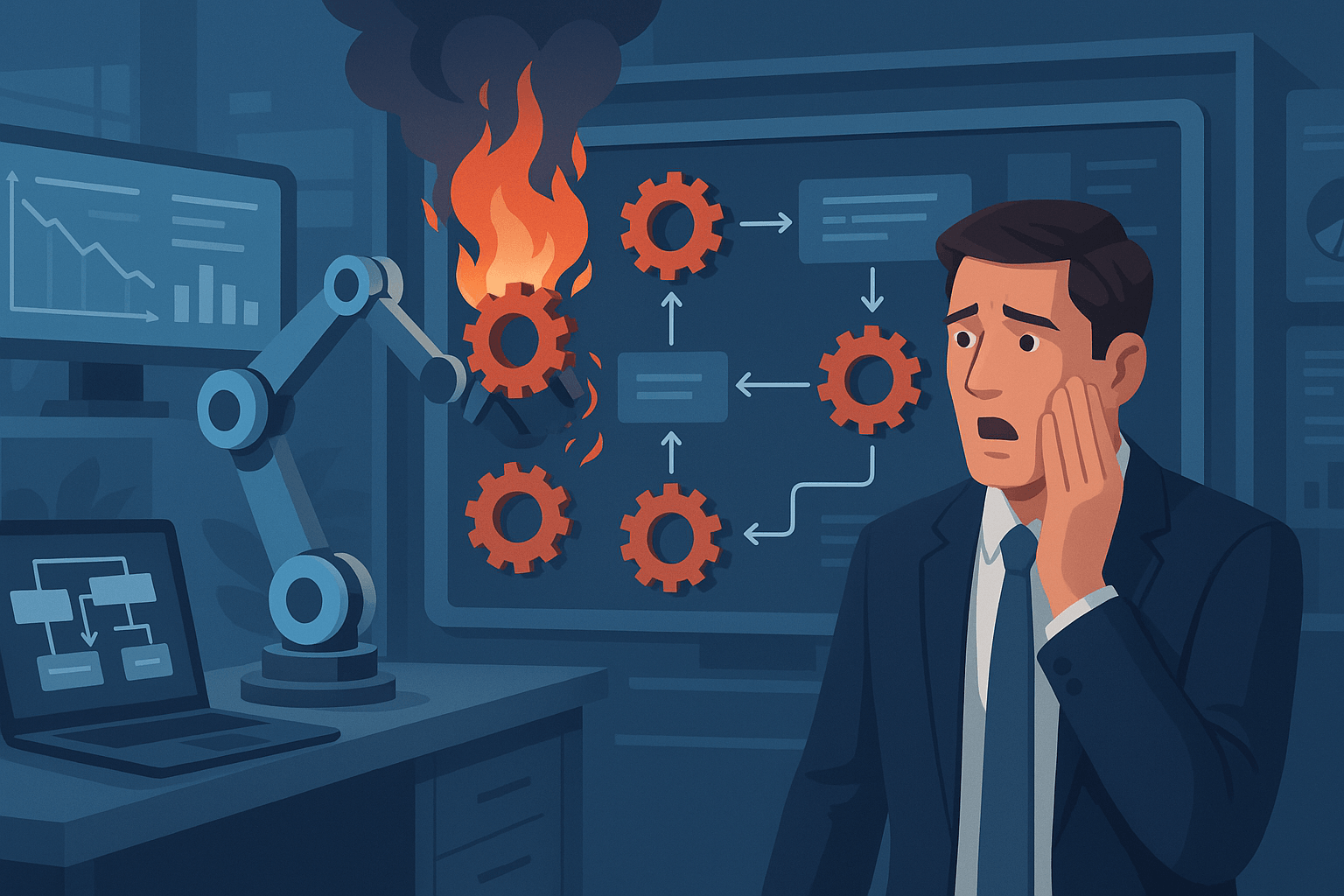
Picture this: you’ve just decided to automate your business processes. You’re dreaming of a sleek, efficient operation, where tasks are handled by bots while you sip piña coladas on a tropical beach. Sounds great, right? But wait! What if your automation strategy is actually a recipe for disaster? You could end up with a digital horror show that even Stephen King would find terrifying.
Automation can be a magical wand that transforms your business, or it can be the digital equivalent of stepping on a Lego in the middle of the night. Spoiler alert: most of the time, it’s the latter. From missed emails to bots accidentally sending out the wrong messages to customers, the automation horror stories are real, and they are hilarious—if they weren’t happening to you.
So, before you dive headfirst into the world of automation, let’s take a comedic journey through the pitfalls of automation strategies and learn how to avoid turning your business into the punchline of a bad joke.
The Allure of Automation
Ah, automation—the shiny new toy that promises to make your life easier. Who wouldn’t want to replace tedious tasks with a few clicks? But remember, just because it’s shiny doesn’t mean it’s safe. Automation can quickly become an alluring siren that lures you into treacherous waters. You might think, “Hey, I’ll automate my email responses!” But then you find yourself sending out messages like, “Thanks for your inquiry! Our team is currently enjoying a vacation in the Bahamas.” Not exactly the response your customers were looking for!
Automation often tempts businesses with promises of efficiency and cost savings, but it can also lead you astray. For every success story of a company that nailed their automation strategy, there are countless tales of woe where businesses found themselves tangled in a web of malfunctioning bots and irate customers. The key? Know what you’re getting into before you start.
Common Failure Modes
Before you embark on your automation journey, it’s essential to understand the common failure modes that could turn your plans into a disaster. Here are just a few:
- Unclear Goals: If you don’t know what you want to achieve, how can automation help?
- Over-automation: Automating everything can lead to a loss of the personal touch, leaving customers feeling cold.
- Ignoring Feedback: If your bots are driving customers away, but you’re too busy to notice, you could be in trouble.
- Lack of Testing: Launching without thorough testing is like driving a car without checking the brakes—potentially disastrous.
- Inadequate Training: Bots are only as good as the humans behind them. If your team isn’t trained, expect chaos.
- Incompatibility: Your shiny new automation tool must play nicely with existing systems; otherwise, it’s just a digital paperweight.
- Neglecting Maintenance: Like a car, automation requires regular check-ups. Ignoring this can lead to breakdowns.
Pitfalls of Automation Strategy
Now that we’ve covered the common failure modes, let’s dig deeper into some specific pitfalls that can turn your automation dreams into nightmares:
Pitfall #1: Relying on One Tool – Just because you found one tool that works for a task doesn’t mean it’s the end of the search. Relying solely on one tool can lead to significant gaps in your process. Imagine a world where you only ever used a spoon, even for steak! Ouch!
Pitfall #2: Not Involving Your Team – Your team members are the lifeblood of your organization; excluding them from the automation conversation can lead to resentment and pushback. Nobody wants to be “that person” who has to work around the new bot that doesn’t understand their job.
Pitfall #3: Forgetting About Security – Automation often involves sensitive data. Failing to prioritize security can lead to breaches that would make even the most seasoned hacker blush. Remember, your bots should be more secure than your uncle's secret recipe for chili!
Implementation Plan: A 4-Week Timeline
Now that you know what to avoid, let’s break down how to implement your automation strategy in a structured way over four weeks:
Week 1: Needs Assessment
Spend this week gathering input from your team. What processes are bogging them down? What tasks could be automated? This is where the magic begins! Use surveys, interviews, and brainstorming sessions to get ideas flowing.
Week 2: Tool Selection
Based on your findings from Week 1, research potential automation tools. Choose one or two that fit your needs and budget. Don’t forget to consider scalability—what works today may not suit your needs tomorrow!
Week 3: Pilot Testing
Before going full throttle, test your chosen tools with a small team or process. Gather feedback and make necessary adjustments. This is your chance to catch any potential hiccups before they become full-blown disasters.
Week 4: Full Rollout
Once you’ve ironed out the kinks, roll out your automation strategy across the organization. Ensure everyone is trained and aware of the changes. And remember, monitoring is key! Just because it’s automated doesn’t mean you can set it and forget it.
Tooling Options: Scrappy, Growing, Mature
When it comes to automation tools, there’s a tier for every business size and budget:
Scrappy
Tools like Zapier and IFTTT are perfect for startups or small businesses looking to dip their toes into automation without breaking the bank.
Growing
As your business expands, consider tools like HubSpot or ActiveCampaign that offer more robust features and integrations.
Mature
For established companies, platforms like Salesforce or Oracle can handle complex automation needs and offer advanced analytics to drive your strategy.
Checklist: 15 Steps to Successful Automation
- Define clear objectives for your automation strategy.
- Involve your team in the planning process.
- Research and select the appropriate tools.
- Test tools in a controlled environment.
- Train your staff on new processes.
- Implement security measures for data protection.
- Monitor the performance of automated tasks.
- Gather feedback from users regularly.
- Make adjustments as necessary.
- Document processes for future reference.
- Stay updated on new automation technologies.
- Be prepared to pivot your strategy as needed.
- Encourage a culture of experimentation within your team.
- Celebrate small wins to encourage buy-in.
- Evaluate ROI to assess the effectiveness of your automation.
- Reach out for expert help when in doubt.
FAQ
What is automation in business?
Automation in business refers to the use of technology to perform tasks with minimal human intervention, increasing efficiency and reducing errors.
How can I avoid automation failures?
To avoid failures, set clear goals, involve your team, test thoroughly, and monitor performance regularly.
What tools should I consider for automation?
Choose tools according to your business size: Zapier for scrappy setups, HubSpot for growing businesses, and Salesforce for mature operations.
Is automation only for large businesses?
No, automation can benefit businesses of all sizes! Small businesses can start with simple tools and gradually scale up.
How do I train my team for automation?
Provide hands-on training, create documentation, and encourage questions to ensure your team is comfortable with the new processes.
What happens if my automation fails?
If automation fails, quickly assess the issue, gather feedback, and make necessary adjustments to avoid further disruptions.
Conclusion
As we’ve journeyed through the comical and cautionary tales of automation gone wrong, it’s clear that while automation can be a game-changer for your business, it requires careful planning and execution. Don’t let your automation strategy become a recipe for disaster! By understanding the common pitfalls, creating a solid implementation plan, and selecting the right tools, you can harness the power of automation without losing your sanity.
If you’re feeling overwhelmed and need a helping hand, contact Jackbyte for an AI/automation assessment. Let us help you navigate the automation maze so that you can focus on what you do best—running your business and enjoying that piña colada!